
How Long Does Branding Take? A Realistic Timeline
Ask ten business owners how long branding takes and you will get ten different answers, from a logo in a weekend to a full identity that took three months. The strange part is that both answers can be honest. Branding is not a single product with a single timeline. It is a series of decisions, from discovery and strategy to concepts, refinement, and final files, and the time changes with every choice you make inside that series. A logo alone is fast. A complete brand identity, with a colour palette, typography, guidelines, and templates, takes real time, and rushing it usually shows in the result.

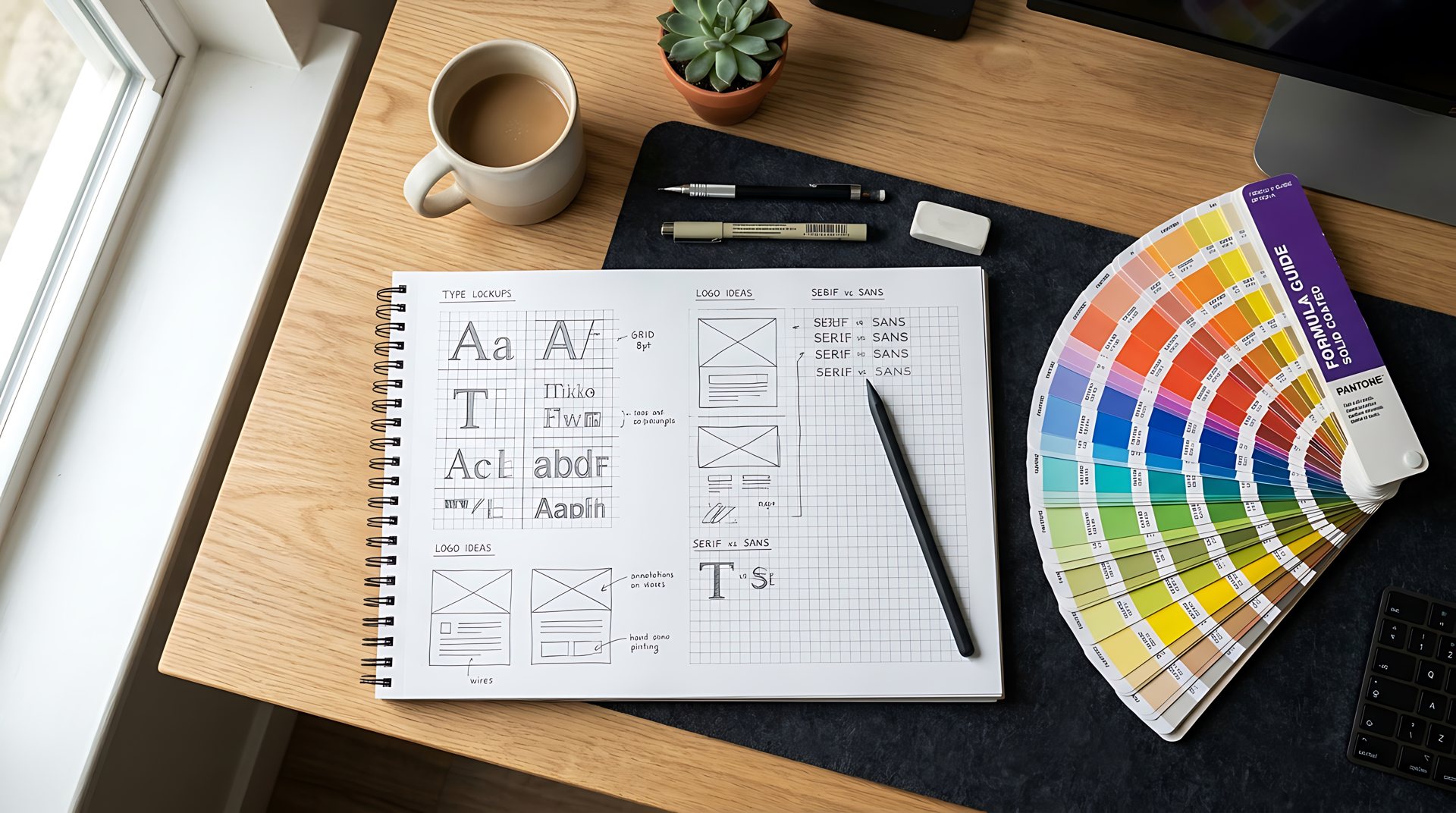
The same thing happens with branding. One designer promises a logo in three days, another says a brand identity needs six weeks, and both may be right for the job they are describing. A logo on its own is a small job. A brand that has to work on a website, on packaging, on social media, and in print is a much bigger one, and the thinking before the drawing is where most of the time goes. Without knowing what sits behind each timeline, it is easy to set a launch date that no good designer can meet, or to wait months for work that should have taken weeks.
This guide gives you a realistic branding timeline, phase by phase, with the typical week ranges you can actually plan around, the delays that catch most businesses out, and the ways to keep your project on schedule. You will also see how itcroc LLC prices Brand Identity in clear fixed packages, with Launch delivered in 10 business days and Scale in 15 business days from the discovery call. By the end, you will know how long your branding should take, and what to ask for, before you set a launch date.
The short answer
If you only read one section, read this one:
- A logo on its own: typically 1 to 2 weeks, from brief to final files, when feedback is quick
- A full brand identity: typically 3 to 6 weeks, including discovery, concepts, refinement, and guidelines
- A rebrand: typically 4 to 8 weeks, because existing materials, customers, and a launch plan all need time
- itcroc LLC Brand Identity Launch: $600, delivered in 10 business days from the discovery call
- itcroc LLC Brand Identity Scale: $1,500, delivered in 15 business days from the discovery call
- What slows projects down most: slow feedback, extra revision rounds, and scope added after work starts
Everything after this section explains where those weeks go, phase by phase, and how to tell whether a timeline is realistic for the branding you actually need.
Four phases decide almost the entire timeline. Understanding them puts you in control of the schedule, before you set a launch date.
What actually affects how long branding takes?
1. Scope of the brand
Scope is the biggest timeline driver. A logo on its own is one mark, one set of colours, and a handful of files. A full brand identity adds a colour palette, typography, patterns, imagery rules, social templates, and guidelines, and each piece needs its own thinking, testing, and approval. Before you ask how long branding takes, write down exactly what the brand has to include, because a bigger scope is not a slower designer, it is a bigger job.
2. Discovery and strategy
Discovery is the thinking before the drawing, and it is the phase most people skip when they want branding fast. A good discovery asks who your customers are, what your competitors look like, what your brand should stand for, and where the brand will be used. It usually takes a few days, including a discovery call and a short brief, and it saves weeks later, because a logo built on a clear strategy rarely needs a complete rethink.
3. Concepts and revision rounds
Concepts are the first visual ideas, and revisions are the rounds that turn the best one into a finished brand. A typical project shows two or three concepts, then refines the chosen one over one or two revision rounds. Each extra concept, and each extra round, adds days, because the designer has to rework the logo, the colours, and every place the logo appears. Agree the number of concepts and rounds in writing before work starts, so a timeline cannot drift.
4. Final files and guidelines
The last phase is often the one people forget to budget time for. Final files mean the logo in every format you will need, print and digital, light and dark versions, and the source files themselves. Guidelines mean a short document that shows how to use the logo, the colours, and the type, so anyone on your team can keep the brand consistent. A brand without guidelines is finished faster, but it starts to drift within months, and fixing that drift costs more than writing the guide.
5. Feedback speed
Feedback speed is the factor most businesses control, and the one that causes most delays. A designer can present concepts on a Tuesday, but if the decision takes ten days, the timeline moves by ten days. Projects with one decision maker, and a reply within one or two business days at each stage, stay on schedule. Projects with a committee, or with feedback that changes direction each round, can double in length without any extra work being added.
What happens inside a branding timeline
A branding timeline is really four phases in a row: discovery, concepts, refinement, and final files with guidelines. Each phase needs its own time, and each phase depends on the one before it, so cutting a week from discovery usually adds two weeks of revisions later. That is why a realistic timeline is a promise you can plan around, not a guess made to win the job.
If your current brand feels rushed, inconsistent, or out of date, a good next step is to check whether it is actually working for visitors. Our free UX audit is hand-reviewed by a senior designer, the findings are written in plain English, and you receive them within 5 business days, so you can see what to fix before you spend more on branding.
The three ways to get branding done, compared honestly
Do it yourself with a logo maker. Tools like Canva, Looka, and LogoMaker can produce a logo in an afternoon, often for $20 to $100. They are fine for a first draft, a test, or a hobby project. The limits are real: the logo is often based on a template, the files are limited, and there is no strategy, no guidelines, and nobody to ask when the logo does not work in print. Typical time: a weekend, plus the weeks you spend fixing it later.
Freelance brand designers. The middle path, and often a good one. A skilled freelancer will ask about your customers, show you two or three concepts, refine the chosen one, and deliver proper files. Typical time: 2 to 4 weeks for a logo and a simple identity, longer if guidelines and templates are included. Ask for a fixed price, the number of concepts and revision rounds, and the file list in writing.
Studios and agencies. You get a team, a process, and someone accountable for the outcome, plus discovery, guidelines, and files that work everywhere. Typical time: 3 to 6 weeks for a full identity, with fixed-price Brand Identity packages at itcroc LLC delivered in 10 business days for Launch and 15 business days for Scale from the discovery call. For a rebrand, with existing customers and materials to update, expect the upper end of the range.
There is no universally right answer. There is only the right answer for your business, your launch date, and how much your brand has to carry.
Branding timelines by type
Logo only. One logo mark, colours, and final files, with no guidelines or templates. Typically 1 to 2 weeks, when the brief is clear and feedback is quick.
Logo and colour palette. A logo, a colour palette, and basic typography choices, ready for a website and social media. Typically 2 to 3 weeks.
Full brand identity. Logo, palette, typography, patterns, imagery rules, and guidelines. Typically 3 to 6 weeks, which is where itcroc LLC Brand Identity Scale, at $1,500 and 15 business days, sits for a focused scope.
Rebrand. A new identity for an existing business, with old materials, customers, and a launch to plan. Typically 4 to 8 weeks, because the rollout takes as long as the design.
Brand guidelines and templates. A guidelines document, plus social templates, presentation templates, and email signatures. Typically 1 to 2 extra weeks on top of the identity, and the part that keeps a brand consistent after launch.
The phases of a branding project, week by week
Every branding project follows the same four phases, even if the weeks change with the scope. Here is a realistic picture, framed as typical ranges, so you can plan a launch date around it:
- Phase 1, Discovery: days 1 to 5, typically. A discovery call, a short brief, research into customers and competitors, and a clear direction for the brand. This is the cheapest phase to get right, and the most expensive to skip.
- Phase 2, Concepts: week 2 to week 3, typically. Two or three logo concepts, each shown in real use, on a website header, a social profile, and a business card, so you judge them as a brand, not as a drawing.
- Phase 3, Refinement: week 3 to week 4, typically. The chosen concept is refined, colours and typography are tested, and one or two revision rounds shape it into the final mark.
- Phase 4, Final files and guidelines: week 4 to week 6, typically. Final files in every format, plus a guidelines document and templates, so your team can use the brand consistently from day one.
The simple way to think about it: a logo can be done in a week, a brand cannot, because a brand has to survive in the real world, not just look good on a presentation slide.
Red flags in a branding timeline
After reviewing many branding projects, these are the patterns that predict a late launch:
- No discovery at all. If the designer starts drawing before asking about your customers, your competitors, and your goals, expect a logo you will have to redo.
- No written scope or timeline. If the quote does not list the phases, the number of concepts, the revision rounds, and the delivery date, every disagreement later becomes a delay.
- Unlimited revisions promised. Unlimited sounds generous, but it usually means no decision is ever final, and the project drifts for weeks.
- No single decision maker. When five people have to approve every concept, feedback arrives late, contradicts itself, and the designer cannot move forward.
- Scope added after work starts. A new tagline, a new product name, or a new template added in week three pushes every later phase back by the same amount.
- No final files or guidelines included. A brand delivered as a single JPG, with no source files and no guide, is not finished, however fast it arrived.
How to keep your branding project on schedule
- Write the brief before you start. Who your customers are, what your brand should stand for, and where the brand will be used. A clear brief on day one can save a week of revisions later.
- Name one decision maker. One person who gives feedback, and one person who approves it. Two people giving opposite feedback in different rounds is the fastest way to add weeks.
- Reply within one or two business days. At each stage, a quick, clear reply keeps the timeline moving. A ten-day wait at any stage moves the delivery date by ten days.
- Freeze the scope. A new tagline, a new product name, or a new template added after work starts pushes every later phase back. Add new ideas to a second phase, after launch.
- Approve the direction early. Agree the concept before the designer builds the full identity around it. Changing direction after refinement means starting again.
A worked example: one real branding timeline, week by week
To make all of this concrete, here is a realistic timeline for a small services business that needs a brand identity before a website launch:
- Days 1 to 5, Discovery: a free 30-minute discovery call, a short brief, research into customers and competitors, and a clear direction for the brand
- Week 2, Concepts: two or three logo concepts, each shown in real use, on a website header, a social profile, and a business card
- Week 3, Refinement: the chosen concept is refined, colours and typography are tested, and one revision round shapes it into the final mark
- Week 4, Final files and guidelines: final files in every format, plus a short guidelines document, so the team can use the brand consistently
Typical total: 10 business days for itcroc LLC Brand Identity Launch at $600, or 15 business days for Scale at $1,500. After that, the brand is ready to use everywhere, on the website, on social media, and in print, because the files and the guide are already in your hands. Compare that with a logo made in a weekend, with no guidelines, that starts to drift within months.
So what should you plan for?
Just starting out. Plan 10 business days for itcroc LLC Brand Identity Launch at $600, a logo, colours, and typography, ready to use everywhere.
Growing company. Plan 15 business days for Brand Identity Scale at $1,500, with a fuller identity, guidelines, and templates your team can use.
Rebranding. Plan 4 to 8 weeks in total, because the design is only half the job, and updating existing materials and telling customers takes real time too.
Launching a new product. Start branding at least 4 weeks before launch, so the identity, the website, and the launch materials all match on day one.
Our prices, in the open
At itcroc LLC, we publish our prices because we believe you should be able to budget before you ever talk to us:
- Brand Identity from $600
- UI/UX Design from $1,200
- Website Development (WordPress or Framer) from $1,300
- Motion Design from $320
- WordPress Care Plans from $49/month
Every project is a fixed price agreed before we start, 50% to begin, 50% on delivery. No hourly billing, no surprise invoices, and you own your brand, your logo, and your files.
Frequently asked questions
How long does branding take?
A logo on its own typically takes 1 to 2 weeks. A full brand identity typically takes 3 to 6 weeks, including discovery, concepts, refinement, and guidelines. At itcroc LLC, Brand Identity Launch is delivered in 10 business days, and Scale in 15 business days from the discovery call.
How long does a logo take on its own?
A single logo, with a clear brief and quick feedback, typically takes 1 to 2 weeks from brief to final files. The drawing itself is fast, the thinking, the concepts, and the revisions are what take the time.
What slows a branding project down most?
Slow feedback, extra revision rounds, and scope added after work starts. A ten-day wait for a decision moves the delivery date by ten days, and a new tagline or template added in week three pushes every later phase back.
What happens in discovery?
Discovery is a short research phase at the start. It usually begins with a free 30-minute discovery call, then research into your customers and competitors, and a clear direction for the brand, so the logo is built on strategy, not on guesswork.
How many logo concepts should I expect?
A typical project shows two or three concepts. More concepts do not mean a better result, they mean more time spent choosing, and less time refining the best idea. Agree the number of concepts and revision rounds in writing before work starts.
Can branding be done faster?
Sometimes, if the scope is small and feedback is fast. A logo-only project can be done in a week, and itcroc LLC Brand Identity Launch is delivered in 10 business days. Rushing a full identity, though, usually shows in the result, because the thinking is the part that cannot be skipped.
Not sure what your brand actually needs?
Start with a free UX audit. Send us your current website and a senior designer will review it by hand and send you a clear report in plain English within 5 business days, showing whether your brand, your logo, and your website are actually working together.
Get your free UX audit, or book a free 30-minute discovery call if you would rather talk it through first.
Keep reading
Build Better Digital Experiences.
itcroc helps businesses create modern websites, UI/UX design systems, Framer landing pages, and scalable WordPress solutions for optimal performance and growth.

