
Do You Need a Brand Identity or Just a Logo?
A logo is the most visible part of a brand, and also the most misunderstood. Ask a new business what it needs and the answer is usually a logo. Ask a business that has been trading for two years and the answer is often different: they need everything to look like it belongs to the same company, and a logo on its own does not do that.
This guide explains the difference between a logo and a brand identity in plain language: what each one includes, who needs which, what they cost, and how to decide for your stage of business. If you are testing an idea, a good logo can be enough. If you market your business in several places, an identity pays for itself.

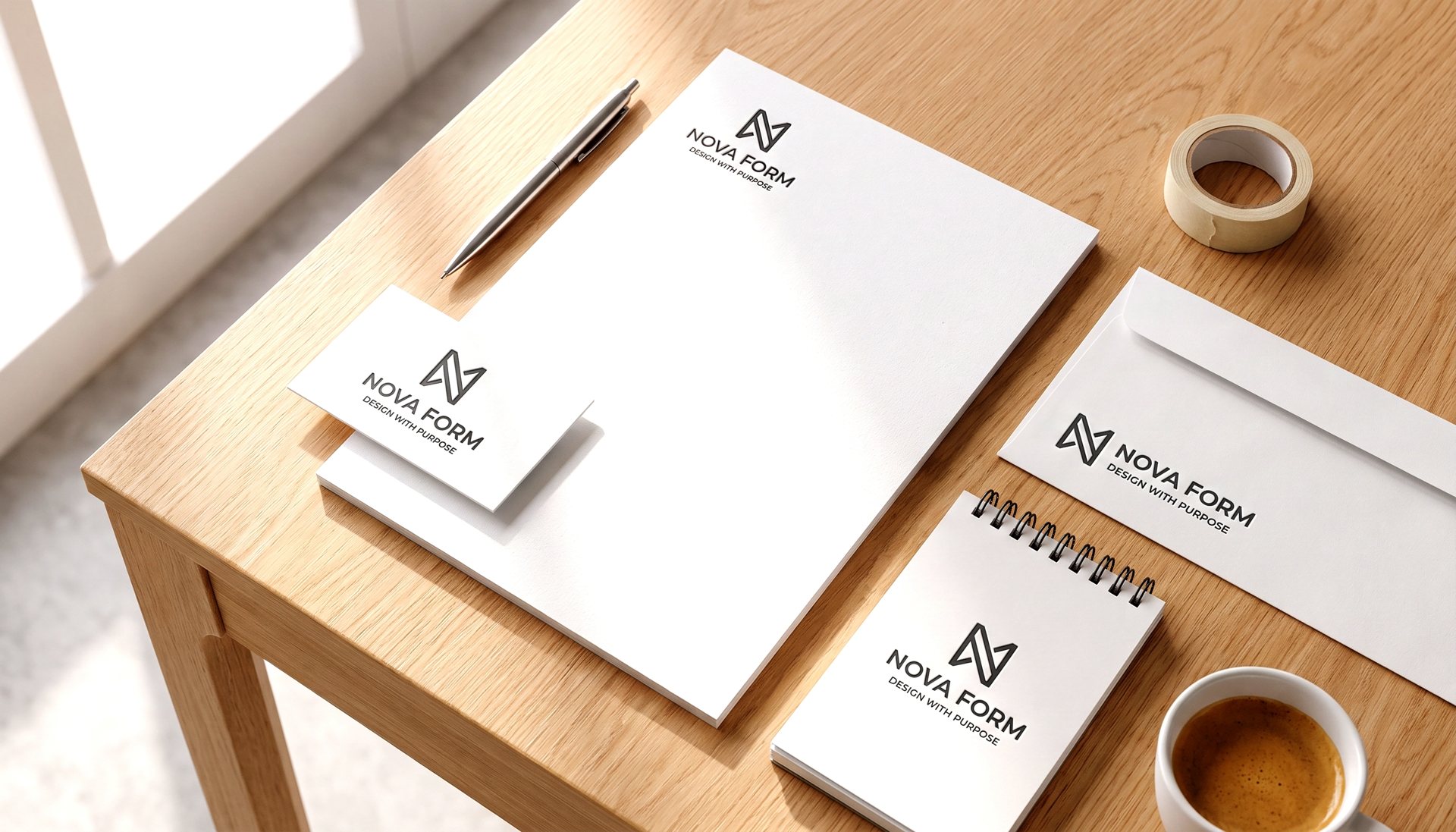
A logo is a single mark: the symbol, wordmark or combination that identifies your business. It goes on your website, your invoices, your social profiles and your packaging. It is the signature, and it matters, because it is the thing people remember. But a signature on its own is not a visual system. It does not tell anyone which colours to use, which fonts to pair, or what a social post should look like.
A brand identity is the whole visual system around that mark: the colours, the typography, the imagery and icon style, the templates for social media and documents, and a guidelines document so anyone can produce on-brand materials. When it is done well, a customer can recognise your business from a single social post, a flyer or a van, without reading the name. That recognition is what you are actually buying.
The short answer
If you only read one section, read this one:
- A logo is a single mark. It identifies your business, and it is the thing people remember.
- A brand identity is the whole visual system around it. Colours, typography, imagery, templates and a guidelines document.
- If you are testing an idea, a good logo can be enough. Spend the money on proving the idea first.
- If you market your business in several places, identity pays for itself. It keeps every channel looking like the same company, and it stops the slow drift into inconsistency.
Everything after this section explains what each one includes, the decision guide by situation, the cost comparison, and what itcroc Brand Identity packages include.
If you already have a logo you like, you do not have to start again. An identity can be built around it.
What a brand identity adds on top of a logo
1. Colour palette
A set of colours chosen to work together, with exact codes for print and screen, and rules for when to use each one. A logo on its own usually comes with one or two colours and no guidance, so every new design invents its own palette. A defined palette means a social post, a flyer and a website all use the same colours, and customers start to recognise the business by colour alone. It also stops the slow drift where every designer adds a new shade and the brand quietly falls apart.
2. Typography
The fonts for headings, body text and accents, with sizes and rules for how they are used. Typography does more of the work than most people realise: it sets the tone of every page, every email and every document. A logo does not come with a type system, so without one, every new piece of work uses whatever font the person making it happens to like. A defined type system keeps the business sounding the same everywhere, even when different people make the materials.
3. Imagery and icon style
The style of photography, illustration and icons that belong to the brand: bright or muted, photographic or illustrated, detailed or minimal. This is the part that makes a brand feel consistent across a website, a social feed and a brochure, because the images all look like they came from the same place. Without it, every stock photo and icon is chosen at random, and the business ends up looking like five different businesses depending on where you find it.
4. Templates for social and documents
Ready made templates for the things you produce most often: social posts, presentations, invoices, proposals and email signatures. Templates are where an identity saves real time and money, because they let anyone on the team produce on-brand materials without a designer. A logo on its own leaves every template to be invented from scratch, which is why so many small businesses end up with a different looking post every week.
5. A guidelines document
A short document that explains the system: the logo and how to use it, the colours, the fonts, the imagery, and the rules for what not to do. This is the piece that makes the identity survive beyond the designer who made it. A freelancer, a new employee or an agency can pick it up and produce materials that look like they came from your business. Without it, the identity lives in one person's head, and it leaves when they do.
A logo is a starting point. An identity is a system.
itcroc Brand Identity comes in two packages. Launch is $600 and covers the essentials: a logo, a colour palette, typography and the core files you need to start. Scale is $1,500 and adds the full system: imagery and icon style, templates for social and documents, and a guidelines document so anyone can produce on-brand materials.
If you are not sure which you need, the decision guide below will tell you in a minute. You can also book a free 30 minute discovery call to talk it through, or request a free UX audit if your website needs the same treatment.
Which one do you need? A decision guide
Just starting and testing an idea. A good logo is enough. You are proving the idea, not building a brand yet, and the money is better spent on the product, the website and the first customers. Keep the logo simple and clean, so an identity can be built around it later without starting again.
Actively advertising and posting. You need an identity. When the business appears on a website, on social media, in ads and in emails, every channel has to look like the same company. A logo alone cannot do that, and the inconsistency starts to cost you trust within weeks.
A team or freelancers making your materials. You need an identity, and specifically the guidelines document. The moment more than one person makes your materials, you need rules, or every person will invent their own version of the brand. Templates and guidelines are what keep a growing team consistent.
Planning to raise prices or reposition. You need an identity. A higher price needs a brand that looks like it is worth it, and a reposition needs a visual system that supports the new story. A logo alone cannot carry a price increase, because customers judge the whole presentation, not the mark.
If two or more of these apply to you, an identity is the right choice. If only the first applies, start with a logo and add the identity when the business is ready for it.
What goes wrong with logo only
Two things, and they happen slowly. First, every channel ends up looking different: the website uses one set of colours, the social feed uses another, and the invoices use whatever the accounting software defaults to. Customers notice, even if they cannot say why, and the business starts to feel less trustworthy. Second, materials look homemade over time. Without templates or guidelines, every new post, flyer or document is designed from scratch by whoever is available, and the quality drifts. The business ends up looking smaller and less professional than it is, and that costs sales.
What a brand identity does for a growing business
It makes the business recognisable, consistent and easier to trust. Recognition means a customer spots you in a crowded feed without reading the name. Consistency means every touchpoint reinforces the same impression, instead of contradicting it. Trust follows, because a business that looks organised and deliberate is easier to believe. That is also why an identity supports higher prices: customers pay more for a business that looks like it has its act together, and an identity is the cheapest way to look like it.
When a logo alone is genuinely enough
When the business is a side project, a test, or a single channel operation. If you sell through one marketplace, one social account or one local shop, and nobody else makes your materials, a good logo will do the job. The same applies when you are still proving the idea: spend the money on the product and the first customers, and build the identity when the business has a future worth investing in. The key is to choose a logo that an identity can grow around later, so the work is not wasted.
What they cost
- Logo only, DIY: $0 to $100, using a logo maker or a template. Fine for a test, but the result is rarely distinctive.
- Logo only, freelancer: $100 to $1,000, depending on the designer and the number of concepts and revisions.
- Logo only, agency: $1,000 and above, usually as part of a larger project.
- itcroc Brand Identity Launch: $600. Logo, colour palette, typography and the core files you need to start.
- itcroc Brand Identity Scale: $1,500. The full system: imagery and icon style, templates for social and documents, and a guidelines document.
A logo is cheaper than an identity, and for a business that is only testing an idea, that is the right call. For a business that markets in several places, the identity is cheaper in the long run, because it stops the endless redesigns and the slow drift into inconsistency.
What itcroc Brand Identity includes
Launch is $600 and covers the essentials: a logo, a colour palette, typography and the core files you need to start, delivered ready to use on your website, your social profiles and your documents. Scale is $1,500 and adds the full system: imagery and icon style, templates for social and documents, and a guidelines document so anyone can produce on-brand materials. Both are fixed price, agreed before we start: 50% to begin, 50% on delivery. If you already have a logo you like, we can build the identity around it.
An identity also guides the website. A brand identity does not include a website, but it decides how the website should look: the colours, the fonts and the imagery all come from the identity. Our website builds start from $1,300, and a site designed from a proper identity looks like it belongs to the business, not like a template with a logo pasted on it. You can see the packages on our Brand Identity page, and our guide to logo design cost and brand identity design cost explain the market ranges in more detail.
Frequently asked questions
Can I start with just a logo and add identity later?
Yes, and for a new business testing an idea, that is the sensible order. Start with a good, simple logo, prove the idea, and build the identity around the logo when the business is ready. The key is to choose a logo that an identity can grow around, so the early work is not wasted.
What exactly is included in a brand identity?
A logo, a colour palette, typography, an imagery and icon style, templates for social media and documents, and a guidelines document that explains how to use everything. itcroc Brand Identity Launch at $600 covers the logo, palette, typography and core files. Scale at $1,500 adds the imagery and icon style, the templates and the guidelines document.
How much more does a brand identity cost than a logo alone?
A logo alone from a freelancer typically costs $100 to $1,000, and from an agency $1,000 and above. A brand identity from itcroc LLC costs $600 for Launch and $1,500 for Scale. The difference is the system around the logo: the palette, the typography, the templates and the guidelines. For a business that markets in several places, that system pays for itself by keeping every channel consistent.
Does a brand identity include a website?
No, but it guides the website design. The colours, typography and imagery from the identity decide how the website should look, so a site built from a proper identity looks like it belongs to the business. A website build from itcroc LLC starts from $1,300, and it is designed from your identity, not from a template.
How long does a brand identity take?
About 3 to 4 weeks, from the first conversation to the finished files. That includes the logo, the palette, the typography, and for the Scale package, the imagery and icon style, the templates and the guidelines document. A website that follows from the identity is a separate project, and it is quoted once the identity is done.
I already have a logo I like. Can you build the identity around it?
Yes. If your logo is good, there is no need to start again. We build the colour palette, typography, imagery and icon style, templates and guidelines around the logo you already have, so the business keeps the mark its customers recognise and gains the system it was missing.
Not sure which you need?
Use the decision guide above, and if two or more of the situations apply to you, an identity is the right choice. If you would rather talk it through, book a free 30 minute discovery call, or start with a free UX audit to see how your website looks today.
See our Brand Identity packages, or book a free 30-minute discovery call if you would rather talk it through first.
Keep reading
Build Better Digital Experiences.
itcroc helps businesses create modern websites, UI/UX design systems, Framer landing pages, and scalable WordPress solutions for optimal performance and growth.

